
Interior Designer Advice | What to Prioritise Before Renovating
Renovating a home is rarely undone easily. Once walls are moved, openings repositioned, or custom joinery installed, those decisions tend to remain long after the renovation dust has settled.
Yet many homeowners begin the process by focusing on individual selections like tiles, finishes, colours - without a clear understanding of how those choices should relate to the architecture of the home as a whole.
From an interior designer’s perspective, the most successful renovations are not defined by individual choices, but by how those choices work together. Some decisions set the framework. Others bring that framework to life.
Knowing the difference and the order in which decisions should be made - is what creates homes that feel cohesive, calm, and considered over time.
Establishing the Foundations | Layout and Flow
Before materials are selected or furnishings considered, the layout must work.
How you move through the home, how spaces connect, and how rooms function day to day will determine whether the house feels intuitive or compromised. This is particularly important in Australian homes, where open plan living, family life, and indoor–outdoor connections often intersect.
No amount of beautiful finishes can compensate for a layout that doesn’t support the way you live. Flow is foundational and once walls are built, it is one of the most difficult aspects of a renovation to correct.
Light and Orientation | Designing With What Already Exists
Natural light is one of the most influential design elements in any home.
Understanding how light enters a space throughout the day and how it interacts with rooms, surfaces, and materials, informs many downstream decisions. Orientation affects comfort, mood, energy efficiency, and the way colours and finishes appear over time.
These considerations need to be resolved early. Once structural elements are fixed, opportunities to improve light are often limited or expensive.
Translating Architecture Into Atmosphere | Hard Finishes and Furnishings
This is where a renovation truly takes shape.
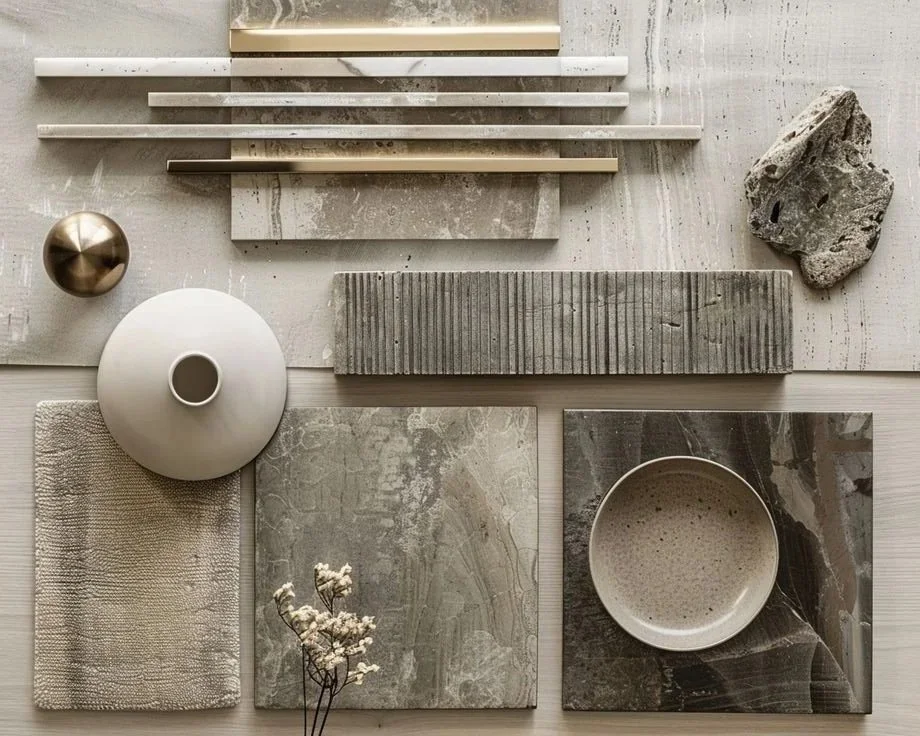
Tiles, timber, stone, paint, and furnishings are not simply decorative layers, they are the elements that translate architectural decisions into a lived experience. When selections are made well, they reinforce proportion, soften transitions, and create a sense of cohesion across the home.
From a designer’s perspective, finish and furnishing selections are most successful when they respond to the architecture, rather than compete with it. Scale, repetition, texture, and restraint all play an important role.
When finishes are selected too early - before layout, light, and joinery are fully resolved, even high-quality materials can feel disconnected. When selected at the right stage, they bring clarity and calm, rather than visual noise.
This is also where longevity is established. Thoughtful material choices age gracefully, reduce the need for replacement, and help a home feel considered rather than trend-driven.
The role of an interior designer is to guide these selections with intention, ensuring each finish and furnishing feels purposeful, balanced, and quietly resolved within the broader design.
Joinery and Built-In Elements | The Backbone of Everyday Living
Joinery sits at the intersection of architecture and interior design.
Storage, cabinetry, and built-in elements shape how a home functions on a daily basis. When well designed, they support routines effortlessly and disappear into the background. When poorly considered, they become constant points of frustration.
Because joinery is both permanent and highly functional, it requires careful planning informed by layout, light, and the material palette as a whole.
Why the Order of Decisions Matters
A well-considered renovation isn’t about making more choices, it’s about making the right choices, in the right sequence.
When structural decisions are clear, material selections become more confident. When finishes are chosen in context, the home feels cohesive rather than assembled. When furnishings are integrated into the design from the outset, spaces feel resolved rather than incomplete.
This is where experienced interior design guidance adds real value - not by complicating the process, but by bringing clarity at each stage.
Thoughtful design allows a home to evolve without losing its sense of intent — creating spaces that feel calm, balanced, and quietly confident, shaped not by perfection, but by considered decisions made at the right time.